

Learn extra at:
Shopping for client tech has at all times been a problem, however what occurs when you may’t even belief a product’s official HDMI specs? It is a conundrum that got here to mild when TFT Central — a pc monitor-focused publication — reached out to the HDMI Discussion board relating to the Xiaomi Quick LCD Monitor 24.5-inch 240Hz model. The show in query listed HDMI 2.1 in its official specs, despite the fact that the monitor solely helps as much as 1080p decision and a 240Hz refresh price.
Up so far, the HDMI 2.1 commonplace had a number of assumed specs, together with 4K/120Hz, 48Gbps bandwidth, variable refresh price (VRR), and auto low latency mode (ALLM). However due to TFT Central’s curiosity, representatives from HDMI.org offered info that makes the HDMI 2.1 label extra ambiguous when seen on TVs and screens shifting ahead.
In line with the group, many options sometimes related to HDMI 2.1 (greater bandwidths, VRR, ALLM) are purely non-obligatory. As a part of the identical newsflash, HDMI.org additionally claimed that HDMI 2.0 not exists. As an alternative, the options of HDMI 2.0 tech at the moment are a subset of the HDMI 2.1 commonplace.
It wasn’t way back that BGR reported on the upcoming Steam Machine’s HDMI identity crisis, however that was a case of under-promising and over-delivering — the {hardware} is labeled HDMI 2.0, however truly helps 2.1 capabilities.
HDMI 2.1 is not at all times HDMI 2.1
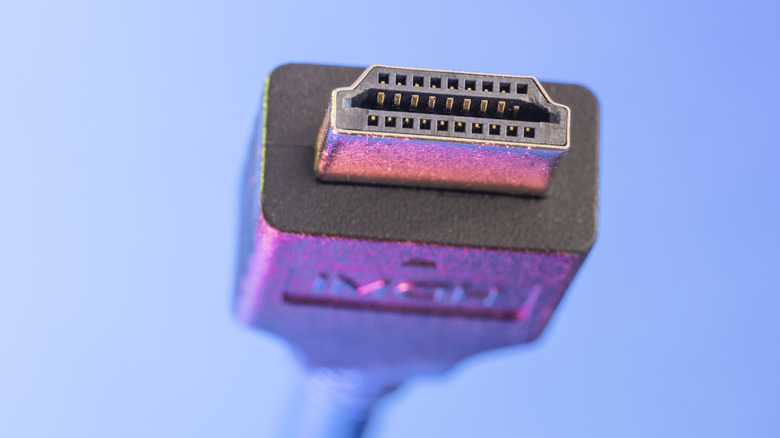
As an alternative of simply specializing in HDMI tips and tricks to get the best picture quality, customers will now need to learn the high quality print to see exactly what specs an HDMI 2.1-certified product helps. To be clear, “correct” HDMI 2.1 ought to help the fastened Charge Hyperlink (FRL) signaling expertise, which changed the older transition minimized differential signaling (TMDS) spec related to HDMI 2.0 and older requirements.
With out FRL help, options like 4K/120Hz, 48Gbps, VRR, and ALLM merely will not be attainable, even when the producer claims the HDMI inputs are all 2.1 licensed. That is precisely what occurred with the Xiaomi monitor talked about above: The official product description says the show helps HDMI 2.1, when in actuality, it solely helps TMDS, 1920 x 1080 decision, and a 240Hz refresh price. Technically, no less than in accordance with TFT Central, this makes it an HDMI 2.0 monitor, lower than the HDMI 2.1 designation.
One caveat: HDMI.org additionally indicated that if a tool claims HDMI 2.1 compliance, the producer must state which options the gadget helps, ostensibly lowering client confusion.
Select your HDMI port (and cable) correctly
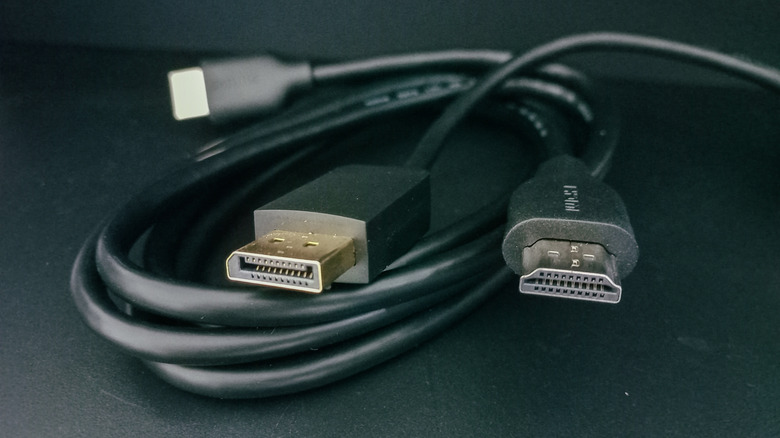
Wanting forward, will it even matter which HDMI port you use on your TV or monitor? That every one is dependent upon what you are trying to get out of your AV setup. In order for you uncompressed Dolby Atmos for all appropriate sensible TV apps, you may nonetheless need to keep on with {hardware} that helps HDMI eARC, which is commonly a whole HDMI 2.1 reference to 4K/120Hz, 48Gbps, and different 2.1 staples.
It is also a good suggestion to double-check HDMI cables which are labeled as 2.1 compliant. Search for post-FRL-powered options like 4K/120Hz, 48Gbps, and VRR, and assume that in case you do not see considered one of these options listed on the cable packaging or product web page, the cable most likely would not help them.
Whereas most HDMI ports will nonetheless work simply high quality for on a regular basis viewing, you may need to be additional conscious of the inputs you are working with (and what specs they really help) when connecting recreation consoles just like the PlayStation 5 and Xbox Sequence X. The identical goes for gaming PCs, in addition to premium dwelling theater soundbars with built-in HDMI switching.

